Imagine this scenario: On a spring evening in southeastern Kansas, a family notices gathering clouds and gusting winds as their phones light up with a tornado warning urging them to take shelter in a nearby public building. Do they evacuate or wait it out at home?
Bridging the gap between what people should do and what they actually do is where psychology comes in. Research on disaster-related decision-making shows that the timing of the alert matters (Gelino, B. W., & Reed, D. D., Journal of Experimental Psychology: Applied, Vol. 26, No. 1, 2020). Other important factors include the distance to the shelter, expectations about shelter conditions, expectations about crowding, and even the alert’s wording.
For example, communicating a 15-minute time window before a tornado’s arrival has proven effective. Providing too long a lead time may give residents a false sense of security, while one that’s too narrow may not allow them enough time to take action. Behavioral psychologists Madison Graham, PhD, at the University of Kansas, and Brett Gelino, PhD, at the Rutgers Robert Wood Johnson Medical School, examine the influence of these factors within Kansas communities through the Adaptive and Resilient Infrastructures driven by Social Equity (ARISE) project.
[Related: Worsening weather is driving smarter behavioral interventions]
ARISE investigates how Kansas residents are adopting protective infrastructure such as home retrofits, residential safe rooms, and community shelters. The need is considerable as Kansas averages more than 80 tornadoes per year. “If we have community safe rooms available, that’s great,” Gelino said. “But they are only as good as people’s willingness to actually use and engage with them.”
By presenting participants with realistic disaster scenarios, Graham and Gelino assess how factors such as financial incentives and perceived social norms influence people’s preparedness decisions. Their findings are already shaping models used by civil engineers to decide where to place community safe rooms—especially in high-risk, lower-income areas where residents may not be able to afford their own residential safe room.
Strategic messaging is another focus, particularly in regions where climate-related language can be polarizing. “We’re trying to dissect what language we should use to speak more clearly to our constituents as well as policymakers,” said Graham. “We want to go under the hood and figure out what framing gets the most effective engagement with these interventions.”
Extreme weather is no longer an infrequent crisis. It has become a recurring strain on human lives, infrastructure, and economic stability. In just the past 2 years, Southern California experienced the costliest wildfire disaster in U.S. history, with an estimated $61 billion in damages. Flash floods in Central Texas claimed more than 135 lives. Meanwhile, the deadliest winter season in 5 years brought 20 major weather events across the continental United States.
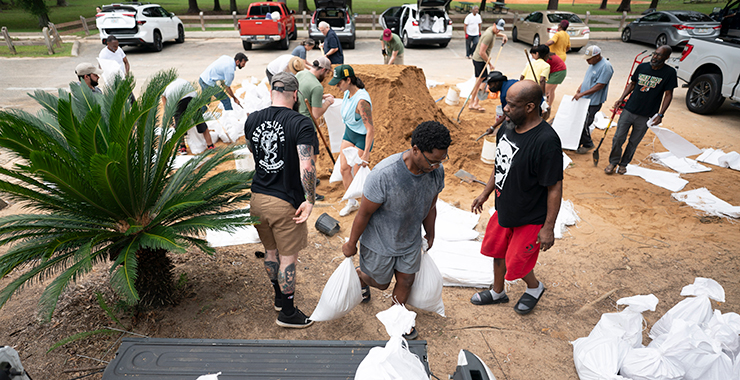
Cities and communities are responding by expanding emergency planning and redesigning the built environment to confront worsening heat waves, storms, floods, fires, and droughts. Graham and Gelino’s work is just one example of the various ways that psychologists and behavioral scientists from around the globe are using the tools of their discipline to prepare people, communities, and cities for this new normal.
Across contexts, experts say three ingredients repeatedly distinguish more resilient cities and communities: treating extreme weather as a public-health issue, considering the communities likely to be most at risk, and investing in social and community infrastructure alongside physical defenses (Urban Pulse: Identifying Resilience Solutions at the Intersection of Climate, Health, and Equity, Resilient Cities Network, 2024opens in new window). When preparedness, response, and recovery plans reflect real human behavior, communities are more likely to achieve both short- and long-term resilience in the face of climate catastrophes. Despite this need, psychological science must still be better integrated into disaster planning at the local, state, and federal levels.