skip to main content

Kecia Thomas's research on workplace challenges for women and people of color

APA Style leaf logo Cite This Article in APA Style
American Psychological Association. (2026, October 27). Kecia Thomas's research on workplace challenges for women and people of color. https://www-apa-org.libdata2015.hilbert.edu/members/content/workplace-diversity

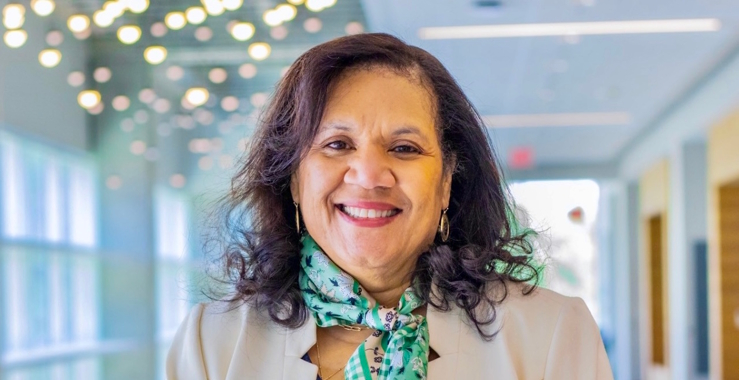
Kecia Thomas, PhD
(Photo: Kecia Thomas)

Organizations and companies are finding out that when it comes to building diversity, hiring college-educated women and people of color is the easy part. Ensuring that they are fully included in all aspects of the company, however, is more of a challenge. That’s the focus of industrial-organizational psychologist Kecia Thomas’s, PhD, life’s work. She researches the psychology of workplace diversity, particularly the resistance that women and people of color face, even at organizations ostensibly eager to increase their diversity.

True workplace diversity, Thomas says, goes beyond superficial demographics—it means being inclusive of the voices and perspectives that come along with workers’ identities. And that benefits organizations as well. Thomas has found that engaging in these practices creates an environment where employees are more engaged with their work.

Throughout her career, Thomas, a professor emerita at the University of Georgia, has authored more than 60 academic articles and chapters and wrote the first industrial and organizational diversity textbook, Diversity Dynamics in the Workplace. Thomas is an elected fellow of APA, the Society for the Psychological Study of Culture, Ethnicity and Race, and the first Black woman to be elected as a fellow of the Society for Industrial-Organizational Psychology.

Pet to threat

Over the past 50 years, the U.S. labor market has transformed. Between 1979 and 2019, the share of workers who are non-White, Hispanic, or Latino increased from 23 to 40%, according to the U.S. Bureau of Labor Statisticsopens in new window. Certain fields have seen more drastic transformations in both race and gender, as growing numbers of women and people of color have pursued higher educationopens in new window. In 1980, for example, 2.6% of physicians were Blackopens in new window, a proportion that has since more than doubled to 5.7%opens in new window. In that same time frame, the proportion of female physicians has tripledopens in new window.

These demographic changes have led to pushback in spaces that have long been predominantly White and male, Thomas says. Sometimes, that looks like outright discrimination and illegal employment practices, but it’s not always that obvious, Thomas says.

In the early 2000s, Thomas and two colleagues from the University of Georgia—counseling psychologist Rosemary Phelps, PhD, and former director of the Institute for Women’s Studies Juanita Johnson-Bailey, EdD—noticed an interesting pattern while attending a leadership development program for women in higher education. Again and again, attendees described feeling both celebrated and marginalized in the workplace: a physicist, the first female faculty member in her department, whose warm and welcoming male colleagues liked to pat her on the back and tell her she reminded them of their daughters; the first female president of a national organization, who was heaped with praise—until she decided to center gender discrimination and harassment as part of her platform.

Each of these women worked in spaces that sought to build more diverse faculty. They all described the same warm paternalism at the beginning of their careers, which turned into resistance or even icy hostility as they rose within their organization. They described having their attempts to start conversations about difference silenced, difficulty accessing information necessary to their jobs, and feeling as though their voice held less weight compared with their White and male colleagues.

Thomas, alongside Johnson-Bailey, Phelps, and then-graduate students Ny Mia Tran, PhD, and Lindsay Johnson, PhD, went on to conduct formal qualitative research on their observations, inviting female professionals to answer open-ended survey questions about their experiences with onboarding, coworkers, and organizations. The team later published their findings in a chapter of the 2013 textbook Psychological Health of Women of Color opens in new window. They called the concept “Pet to Threat.”

“What are pets to families? They’re there for comfort, for support,” Thomas says. “And that’s the role you occupy—especially during a societal era when diversity is something that’s sought after or celebrated.” In workplaces, women and people of color provide reassurance that their White, male colleagues are good, accepting people, Thomas says.

But pets aren’t meant to step out of that role, and when they do, they’re seen as a threat to the status quo, Thomas says. One survey respondent wrote: “I was put ‘out front’ on many issues, but not given the responsibility, what I call, ‘to be seen but not heard.’”

Going viral

Nearly a decade after Thomas and her colleagues first wrote about Pet to Threat, it began resurfacing online. Videos about Thomas’s research—described with varying degrees of accuracy—garnered tensopens in new window of thousandsopens in new window of likes and viewsopens in new window. Redditors posted about Pet to Threat in r/blackladiesopens in new window; coaches and consultants wrote about it in blog postsopens in new window. The idea proliferated so much that Thomas and her colleagues had to apply for a trademark—she started seeing Pet to Threat used to market women’s retreats and other products, without attribution.

The online buzz caught Thomas off guard, but its timing didn’t surprise her. The first viral videos started appearing right around 2020, in the wake of the deaths of George Floyd and Breonna Taylor, and the racial reckoning that followed. Organizations were investing tremendous resources in diversity, equity, and inclusion (DEI)—leading more women of color down that Pet to Threat workplace pathway. “In that immediate post-2020 period, we did see more women of color becoming national models and taking leadership positions in the academy, in government, in Fortune 500 companies,” Thomas says. “But then the reversal starts to come about.”

Thomas points to the 2025 mass federal layoffs as an example of how efforts to boost diversity can signal a pendulum effect to come. These layoffs had a disproportionate impact on Black women, according to an analysis published in the journal Economic Letters opens in new window. And that pendulum effect appears on an individual scale—a Black employee, for example, who goes from being an office’s superstar to suddenly receiving the cold shoulder from their manager.

Thomas frequently sees “the cold shoulder” stories appear in the comments sections of posts and videos on social media about Pet to Threat. She tries to read as many as she can. These online discussions are helping her develop her next project, a potential follow-up study on factors that make the Pet to Threat dynamic more likely in a workplace—for example, the 2020 push for investment in DEI. “When we started this work, we really saw [the push for more DEI] as a reflection of society becoming more prodiversity, even if it was performative,” Thomas says. “But as I read these comments, I think it’s more complex than that.”

Some women described work environments where they were placed front and center for every promotional photo or community engagement event, while their skills—the ones that got them hired following the 2020 reckoning—went underutilized. Others described being asked to do DEI work despite having no background in that area.

Inclusion in practice

Thomas’s own career has bridged research and leadership. She has served as the senior associate dean at the University of Georgia Franklin College of Arts and Sciences and dean of the University of Alabama, Birmingham College of Arts and Sciences. Inclusion is at the center of her leadership style. “I know what it’s like to not be included in a space; I know what it’s like to be in a truly inclusive space,” Thomas says. Her research has taught her that inclusion can’t stop after onboarding—it involves building trust over time.

Thomas’s research has demonstrated that building trust must first involve acknowledging diversity. She has found that a race-neutral approach, which minimizes the significance of racial group membership, can backfire. People with this approach tend to be less likely to admit to noticing bias and discrimination in their workplace interactions; meanwhile, people of color perceive people and organizations who don’t acknowledge race as incapable of seeing them fully. And on an organizational level, a race neutral approach makes bias more likely to go unaddressed.

On the other hand, Thomas has found that integrating diverse perspectives can promote a sense of trust and safety within organizations. This can look like organizational communications that highlight the diversity of the organization. Another example would be offering flexible employee benefits, offering personalized holidays rather than assuming that all employees celebrate Christmas, Thomas says. In one study of nearly 4,600 employeesopens in new window of a large health care company, Thomas and her colleagues found that these practices not only boosted trust, but also resulted in higher levels of engagement in their work.

When organizations tap into workers' diversity of experiences, talents, and positionalities, it adds value to the workplace, Thomas says.

Recommended Reading

APA Member Benefits

Connect with peers

APA Community


Save 35% off pay now rates

Avis and Budget


New products available

APA Merch Store opens in new window


Competitive low rates

Student Loan Refinancing

Related and recent